Starting Solar
Going solar is exciting. The idea of producing clean, free energy right from your own home feels empowering, and it’s often a smart financial move as well. But like any major home upgrade, it’s not something you want to rush into or cut corners on.
A quality residential solar system will come with warranties lasting around 25 years, but that doesn’t mean its functional lifetime won’t be even longer. That means you want something that’s installed with confidence and integrity, a system that won’t cause headaches years down the road. You’ll also be seeing those panels every day, so it’s nicer if they look like a natural extension of your home rather than an afterthought. And if you’re the type who enjoys tracking your system’s energy performance, a clean, intuitive monitoring app makes a big difference.
With all that in mind, here are the key things to look for to make sure your solar system was installed properly, and built to last.
1. Materials
Not all the materials used in your solar install directly contribute to performance and structure. There are a few products and practices that some installers may consider optional, but in reality, they are there to protect your system, your roof, and your home over the long term, making them an important part of a quality installation.
Critter Guard
Some installers consider critter guard mandatory, some offer it as an add-on, while others choose not to bother with it at all. Those differences matter.
Critter guard is a galvanized wire mesh installed around the perimeter of your solar array. Its job is simple: keep rodents, pigeons, and other small animals from nesting under your panels and damaging wiring or components. Anyone who’s had to deal with chewed wires or animal nests knows how costly and unpleasant that cleanup can be.
A reliable installer makes critter guard standard. While it adds a little extra time and effort upfront, it can help prevent costly repairs and maintenance issues down the road.
Snow Guards
Alberta winters can be unforgiving, and your solar panels shouldn’t make things worse.
On particularly steep roofs and under certain conditions, snow can slide off in large, heavy chunks. In some cases, these are big enough to damage patio furniture, decks, or other property below.
Snow guards are small aluminum blocks installed between panels that help hold and break up snow as it melts. A knowledgeable installer will recommend snow guards when conditions call for them, keeping everything below your roof protected.
Mounting and Wiring
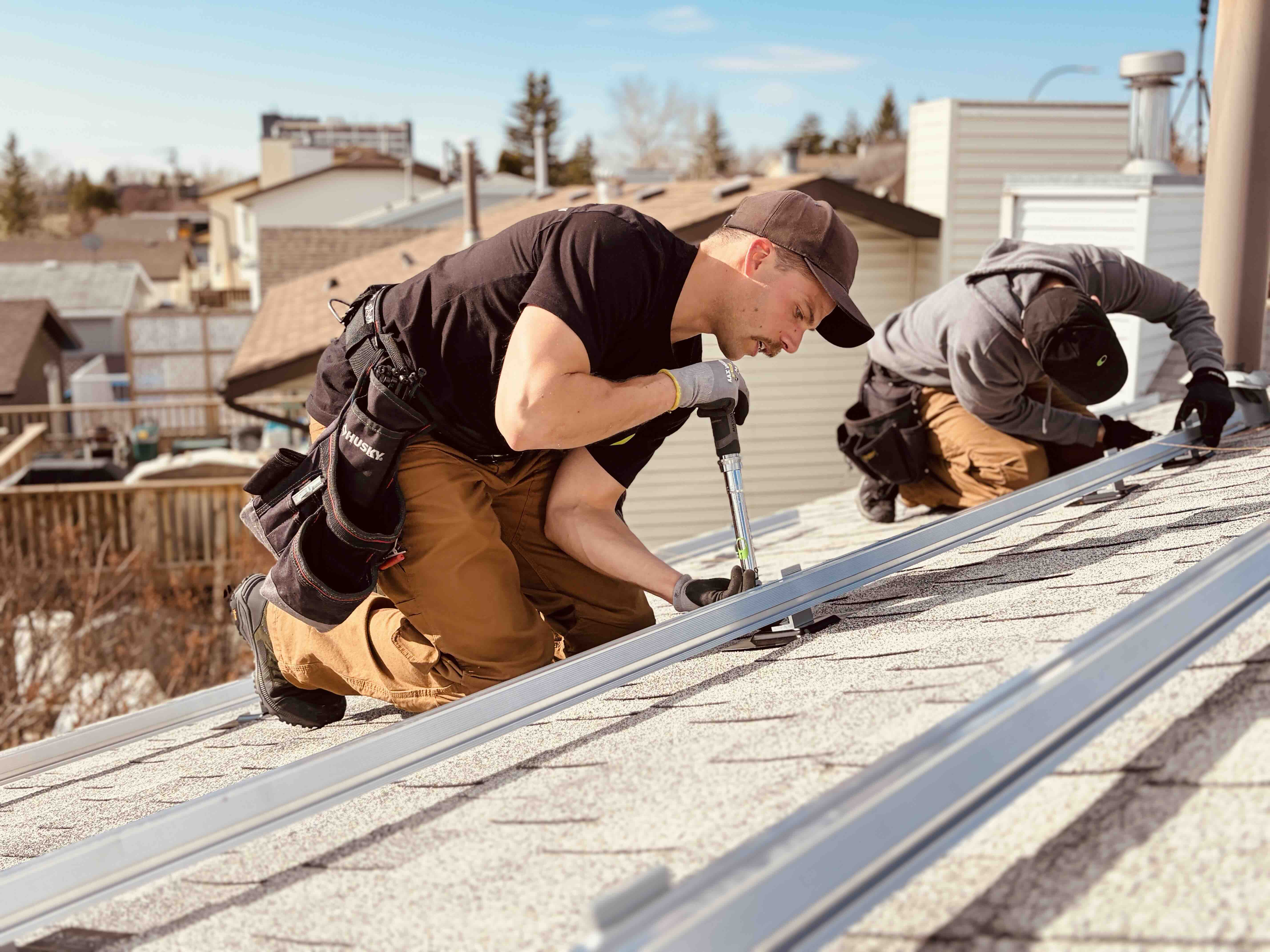
Your roof should be just as solid after solar installation as it was before.
Mounting hardware needs to be installed correctly to maintain the roof’s integrity and prevent leaks over time. (If you want to go deeper on this, we cover proper mounting techniques in the post How many holes will solar panels put in my roof?)
Wiring matters, too. Wires shouldn’t be hanging loosely or touching the roof surface where they’re far more likely to be exposed to moisture, extreme temperatures, debris, or long-term wear. Over a 25-year lifespan, poor wire management can turn into real problems (and it doesn’t look great from the ground, either).

2. Design
A good solar system is thoughtfully designed, not just placed wherever panels happen to fit. Here are some of the major factors a solar design should account for:
Sun Exposure
In Alberta, south-facing roof is often considered ideal, and east-west roofs can also provide excellent solar production. However, it’s rarely that simple. Roof vents, chimneys, nearby trees, and neighboring homes can all affect optimal panel placement.
A prudent installer will use satellite imagery along with an on-site assessment to evaluate shade and roof impediments before finalizing the design. If these factors aren’t properly accounted for, your system may never reach its full production potential, which does not bode well for your ROI.
And a great installer will not be stopped by, or work around roof vents, they’ll just move them to make your solar system the star of the roof, not a bolted afterthought!
Offsetting Your Energy Use
In Alberta, homeowners are limited to installing a system that approximates their annual electricity consumption, with a bit of wiggle room.
A properly designed system aims to get as close to that upper limit as possible. Your solar proposal should clearly show your expected offset percentage and projected energy production. An honest installer will also tell you upfront if your roof simply can’t support a system large enough to fully offset your usage.
If you want to learn more about solar proposals and the items they should cover including offset percentages, check out our other posts on these topics, Comparing solar quotes, and Why your solar system isn’t offsetting your bill in Alberta.
Planning for Expansion
Energy needs change. Maybe you add an EV, a hot tub, or the number of your home’s occupants increases.
If your roof allows for it, a good installer will design your system with future expansion in mind. That includes leaving physical space for additional panels and configuring inverter strings in a way that simplifies expansion. Thinking ahead now can save you money and frustration in the future.
3. Aesthetics
Solar panels are a long-term feature of your home. You’ll see them every day for decades, so how they look matters.
Clean, intentional aesthetics don’t just make your system more visually appealing. Attention to detail is often a sign that the installer takes pride in their work and maintains high installation standards throughout the project.
Some signs of a well-installed, good-looking system include:
- Electrical wiring that runs through the attic (when possible) to minimize visible conduit
- Trimmed mounting rails that aren’t poking past the edges of panels
- Panels that align evenly and tend to follow the natural lines of the roof
- Wiring that is neatly managed and tucked away from roof surfaces
- Purposedly setting the solar panels very low on the roof, which blend much better with the roof!
Simply put, a system that looks clean was usually installed with care.
4. Post‑Install Support
A quality solar install doesn’t end when the panels are turned on.
It’s important to work with an installer who stands behind their work and offers meaningful post-install support. A few questions worth asking:
- If your roof needs replacing in relation to an insurance claim, will they be there to uninstall and reinstall the system?
- Will they help with warranty claims if a component fails?
- Do they offer follow-up inspections or maintenance plans?
5. Monitoring Apps
One of the most lasting pre-install decisions is the type of inverter you choose, but not in the way you might think.
Inverter systems are responsible for converting your solar panel’s DC electricity into the AC electricity your home uses. However, when evaluating inverter options, the user experience with the inverter’s correlating app can be just as important as its technical specifications. Over a 25-year lifespan, that app experience matters more than most people realize. I can’t stress how much this is important – the app will be your only interface with your solar system, and a good app makes a big difference.
If the app is intuitive and provides useful insights into your energy production and usage, it can build confidence that your system is performing as expected, while helping you identify possible issues or underperforming components early. If you’re curious about our preferred inverter systems (with app included), you can read more in our comparison of Enphase vs. AP Systems.
Final Thoughts
A well-installed solar system is the result of many small, thoughtful decisions, from materials and layout to aesthetics and long-term support.
Solar isn’t just a product you buy. It’s a 25-year relationship with your home and your energy future. Asking the right questions and knowing what to look for can make all the difference between a system that simply works, and one that delivers long-term confidence, performance, and value.
Every home is different, and so is every solar installation. Whether you’re seeking a customized quote and consultation, or have questions about equipment, system design, installation practices, or expected production, reach out to our team. We're always happy to help homeowners make informed decisions about solar.