











Curious about how much solar could save you? Request your custom solar quote and proposal!
From design to maintenance and weather, we tackle a few commonly asked questions.
That really depends on how much energy your home uses! If you look at your electricity bill and find your monthly usage in kWh (not dollar amount!), you can use our calculator to determine how many solar panels you will need.
This is usually caused by one of three issues: the system was undersized, usage assumptions were incorrect, or the homeowner’s energy consumption increased after installation.
The largest factors include system size, roof complexity, electrical upgrades, equipment selection, and whether the system is designed for future battery integration. Installation details and overall system design approach also play a significant role in total cost.
Yes. Solar panels continue producing energy in winter, and cold temperatures can actually improve efficiency. When snow covers the panels after multiple freeze-thaw cycles, your solar system will halt production - but don't worry! we account for snow losses when presenting your system's annual production estimates!
Your production will drop on cloudy or hazy days, but summer days are so long in in Alberta that your solar system will still produce a sizeable amount!
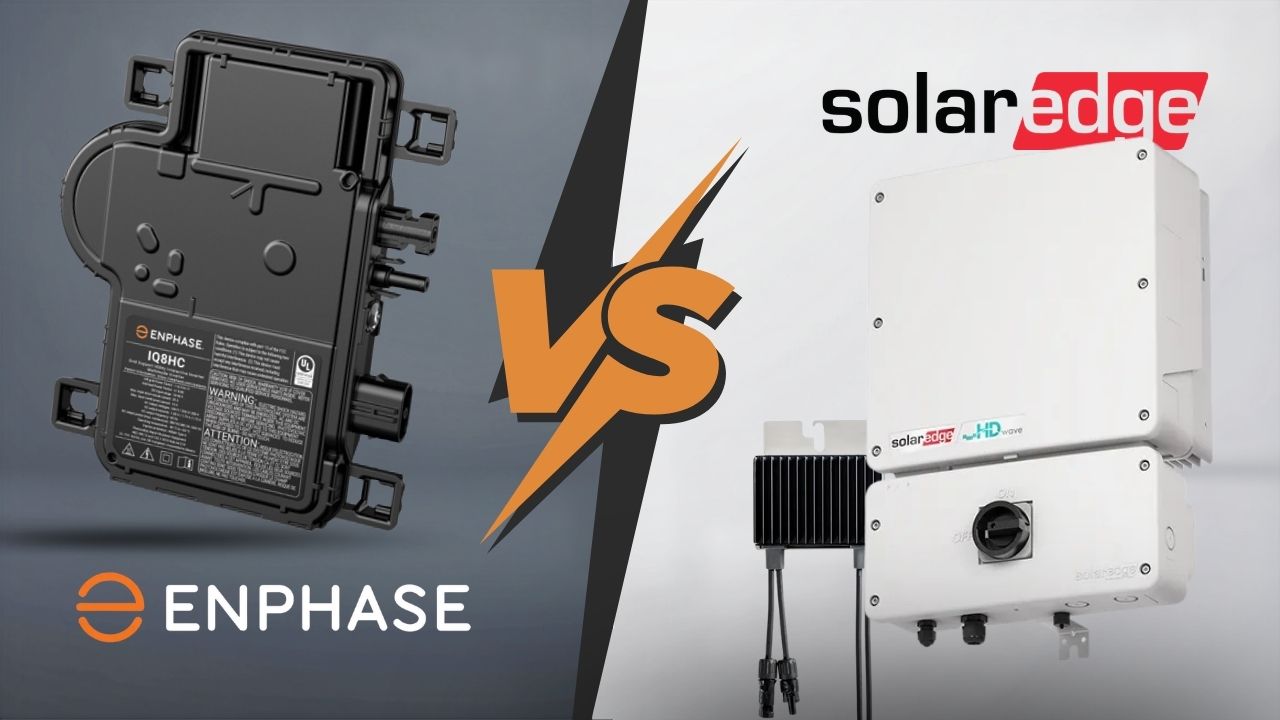
Solar panels turn sunlight into direct current (DC) power through photovoltaic cells; when photons hit the panel, they free electrons to create energy, and your inverter converts that DC into AC power your home runs on. Microinverters do this conversion right on the roof beside each panel, so the power coming off your roof is already in AC.
Most solar panels coming into Canada are warranted for at least 25- years, and there is no reason why they shouldn't last longer.
Solar can be a strong long-term investment in Alberta, but only if the system is designed correctly. The most common issue is overestimated savings based on unrealistic assumptions. A properly sized and engineered system (based on your usage, seasonal production, and export rates) can deliver consistent long-term value.
Comparing solar quotes goes beyond price per watt. You should evaluate system design assumptions, production estimates, inverter selection, monitoring capabilities, expandability, and installation quality. Two similarly sized systems can perform very differently depending on how they’re designed and installed.
This is usually caused by one of three issues: the system was undersized, usage assumptions were incorrect, or the homeowner’s energy consumption increased after installation.
The largest factors include system size, roof complexity, electrical upgrades, equipment selection, and whether the system is designed for future battery integration. Installation details and overall system design approach also play a significant role in total cost.
Yes. Solar panels continue producing energy in winter, and cold temperatures can actually improve efficiency. When snow covers the panels after multiple freeze-thaw cycles, your solar system will halt production - but don't worry! we account for snow losses when presenting your systems annual production estimates!
Because solar costs have dropped over 80% in the past 10 years, payback periods are much better nowadays. Our clients see payback periods between 6 to 12 years, depending on what you are currently paying for electricity, and your roof geometry and orientation. Your solar system will produce electricity for 25+ years so after it has paid for itself, you'll keep making money.