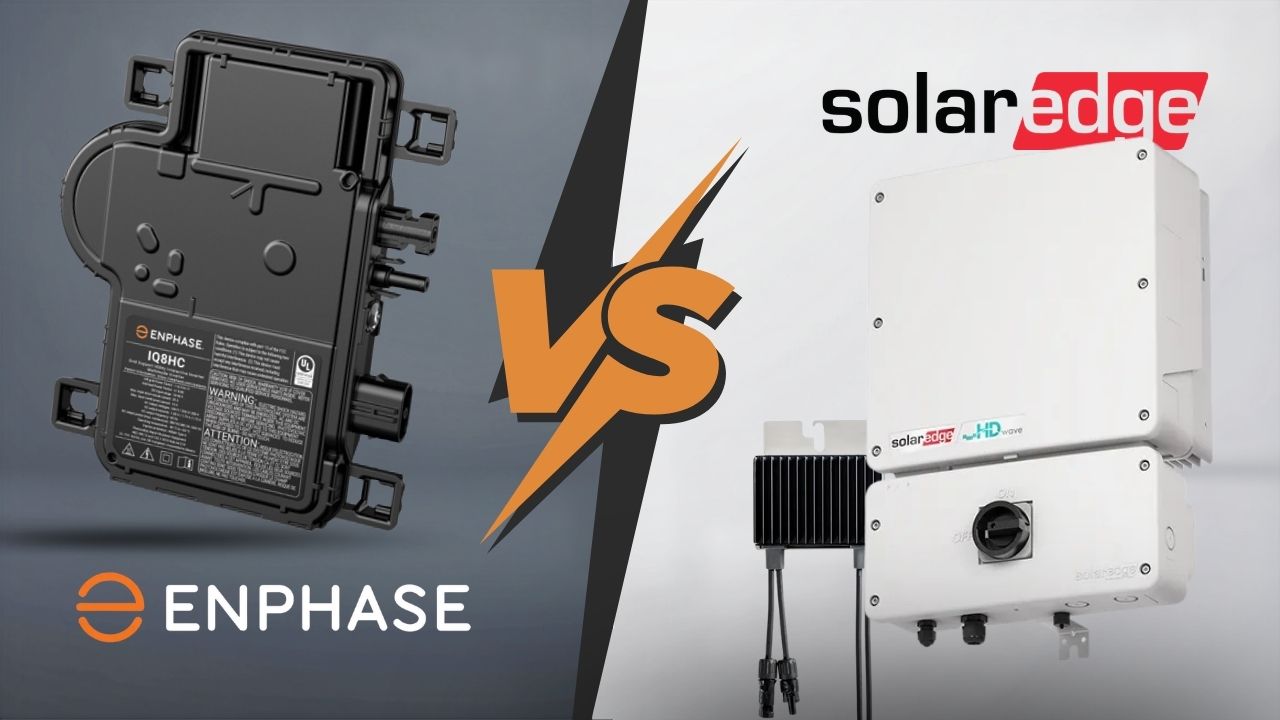

Inverter Failure Rates and Total System Reliability
You may have heard statements online or from some salespeople that microinverters have higher failure rates than string inverters. As with most sweeping statements, this isn’t true, but it does require some nuance to dissect.
Before we dive into it, you should know that not all microinverters offer the same reliability and, as you will see, Enphase (our preferred brand – and we’re not even remotely shy about it) is miles ahead of the competition. Read more about how Enphase stacks up against the industry-standard here: https://www.potential.solar/post/enphase-vs-ap-systems
Note that in this article we are only considering inverter reliability as inverters are more likely to fail than solar panels or solar mounting/racking and, typically, are the major technical difference between solar quotes. We might write an article on solar panel reliability – let us know if you’d like to see that!
Failure Basics
To start, it’s important to distinguish between failure rate, points of failure, failure severity and system reliability.
Failure Rate – how likely a single component is to fail over a certain period
Points of Failure – how many components and connections that can fail are present in a system
Failure Severity – The impact of a component failure on the performance of a system. For example, if the blinkers on your car fail, it’s bad, but you can get it fixed a day or two later. But if the brakes fail, well, that’s another story.
System Reliability – A function of all three of the previously mentioned factors, this is an indication of how reliable your overall system is given the failure rate of each of its components, how many points of failure there are and the severity of each failure mode. The math behind this is fairly complex, but for now, just keep the concept in mind.
So, what is the deal with solar inverter failure rates?
Well, the truth is that solar systems built using microinverters have more points of failure than those built using classic string inverters. This truth has led to the myth that more parts = more failure.
But this myth doesn’t take the other two variables into consideration: failure rate and failure severity.
Some microinverters, like Enphase IQ8’s, offer such low failure rates that it makes up for the increased number of points of failure. Plus, the severity of a microinverter failing is much lower than that of a string inverter. If a string inverter fails, your whole system stops producing, but if a microinverter fails, only the panels connected to it will stop producing.
What are some real inverter failure rates?
Many (but not all) inverter manufacturers publish their failure rates and even though each manufacturer has their own way of testing and reporting failure rates over different lengths of time, it gives us an overall good indication of the product’s long-term reliability. We’ve added the warranted lifetime as a proxy reliability indicator.
The difference between these numbers might not seem like a lot. But take Hoymiles and Enphase microinverters as an example. A 0.05% vs 1.8% failure rate means that for every Enphase microinverter failure, you can expect 36 Hoymiles microinverters to fail!
That’s a big difference.
Consequences of Failure: Solar System Reliability is Better with Enphase Microinverters
So, not all inverters have the same failure rates. And we have already covered several factors to consider - but at the end of the day, it’s about what it might cost YOU as the system owner. So, let’s talk numbers for a hypothetical solar system with 30 solar panels.
Typical Enphase Microinverter Failure
30 Enphase Microinverters = 1.5 (let’s call it 2) microinverter failures over 25 years
Loss per week of downtime from 2 panels = $2
2 x replacements under warranty + labour costs = 2 x $250 = $500
Typical Fronius Inverter Failure
1 Fronius Inverter = 25% chance of failure over 25 years
Loss per week of downtime from 30 panels = $30
50% chance (due to 10 year warranty) of having to pay $3-4k for a new inverter = 4,000 x 50% = $2000
You can see the effects of failure rate, points of failure, failure severity in the numbers above. With Enphase, you are likely to have one or two microinverters fail during the system lifetime, but the severity of failure is not as significant, nor is the cost of replacement. Whereas with Fronius, due to fewer points of failure in the system, you are not as likely to have an inverter failure but if it does fail, the severity and expected cost of replacement is higher.
The bottom line? With system reliability, it somewhat depends what kind of peace of mind you are looking for. However, once you take into account warranties, features, shade tolerance, labour coverage, AC vs DC safety, modularity, battery and EV integration, among others, in our opinion, Enphase is the undisputed champ for urban homes in major cities in Alberta.
Like I said, we have a favourite and we’re not shy about it.
However, when it comes to farms, barns or ground mounted solar, other inverter systems start to shine. We’re always looking to use the best tech for each scenario and, occasionally, it’s not Enphase.
Why You Shouldn’t get Too Caught up in Component Failure Rates
I know, we just went through failure rates, and now I’m telling you that it’s not that important? Well, it’s certainly worth considering, but the truth is that:
- The quality of installation has a huge effect on Total System Reliability (not just electronic reliability, but also waterproofing, wind and snow tolerance, mechanical fixation etc.) and is highly dependent on your installer’s quality control and workmanship
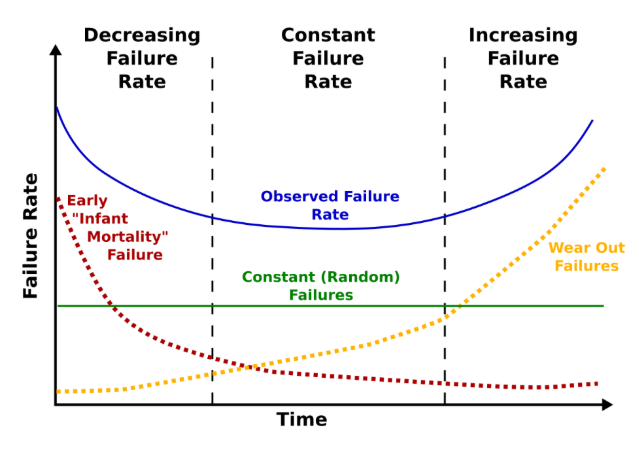
- In real life the failure curve is not evenly distributed. Components are much more likely to fail at the beginning or end of their lifetimes, not in the middle. See the graph below, often called the “bathtub curve”. (thanks Wikipedia). This is why Enphase covering labour costs during the first few years of their warranty period is such a differentiator.
- Not all manufacturers are created equal. In our rare experience of an Enphase microinverter failure, we received a new one overnight and had it installed within 2 days, and Enphase covered the labour costs for the replacement so we didn’t have to charge the client a single cent. We’ve heard horror stories of lawsuits against other inverter companies after clients were caught waiting several months for inverter replacements, installers going out of service, or warranties not being honored.
- Failure math is all about statistics. At the end of the day, you may never experience a failure, or you might get a bad batch of components and need multiple replacements. You can’t know ahead of time, and there’s no sense in getting too tied up in trying to predict the future.
There, now you know a little bit more about inverter failure rates. No, microinverters definitely do not fail more often than string inverters but, as you now know, looking at failure rates only captures part of the picture.
Ready to choose the right inverter for your home?
If you’re comparing microinverters vs. string inverters for a project in Alberta, we can help you pick the setup that makes sense for your roof. Expect to:
- Get a solar quote with an inverter recommendation tailored to your site
- Talk through reliability, warranties, and what happens if something fails
- Ask us to review and compare a couple of quotes you’ve already received
Contact us to book a quick consultation and we will help you design a system you can count on: https://www.potential.solar/contact